![econlifelogotrademarkedwebsitelogo[1]](/wp-content/uploads/2024/05/econlifelogotrademarkedwebsitelogo1.png#100878)


Why the Crunch Is the Challenge
November 23, 2025
The Turkeys That Presidents Pardoned
November 25, 2025
For fast food, fast fashion, tools and toys, we give little thought to an inexpensive purchase. As a result, according to The Wall Street Journal, many of us are addicted to cheap stuff.
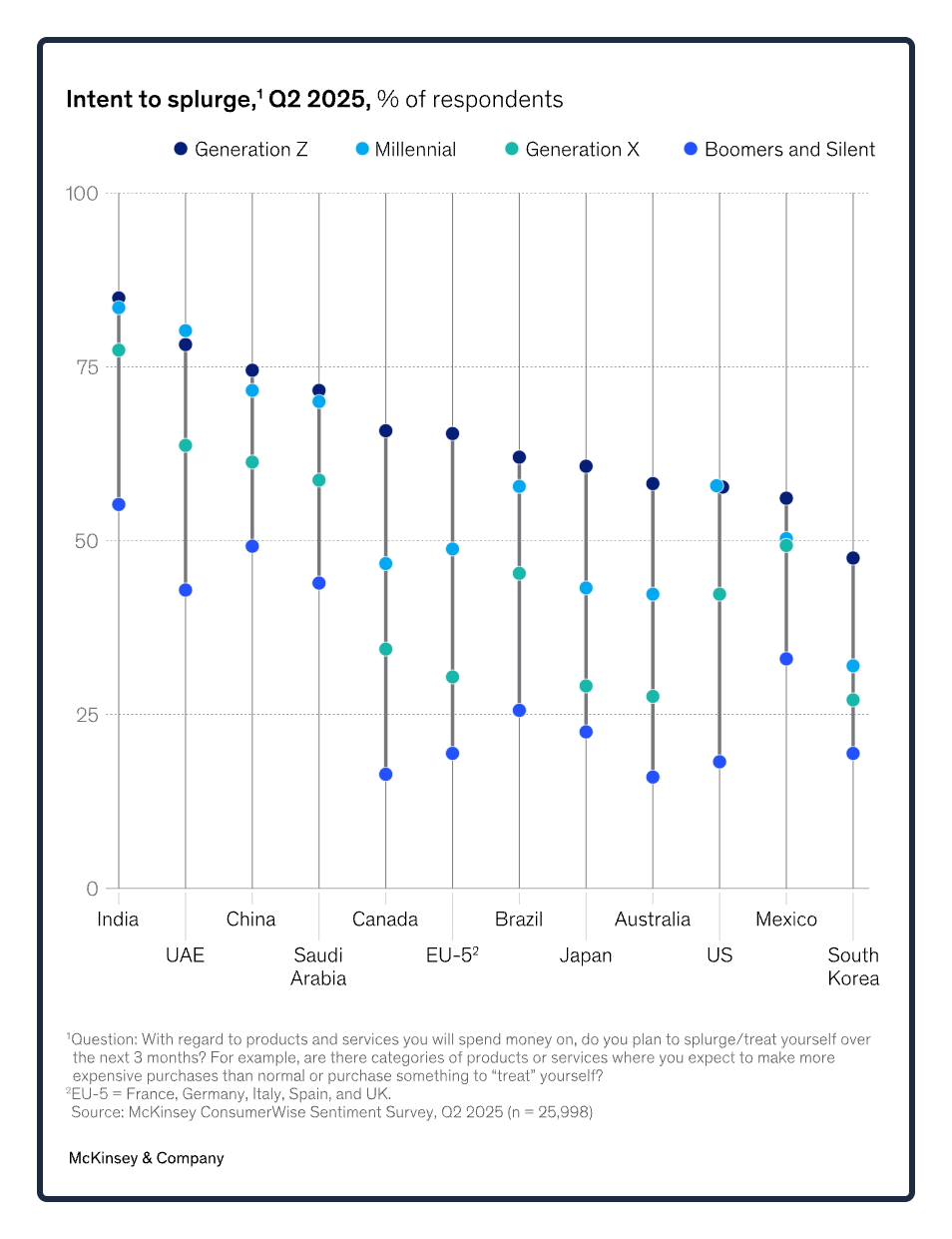
Through surveys of more than 25,000 consumers, McKinsey explained who, why, and what.
Consumer Spending
Who?
First, we can look at the biggest spenders. Even with prices rising, Gen Z is willing to splurge:
Why?
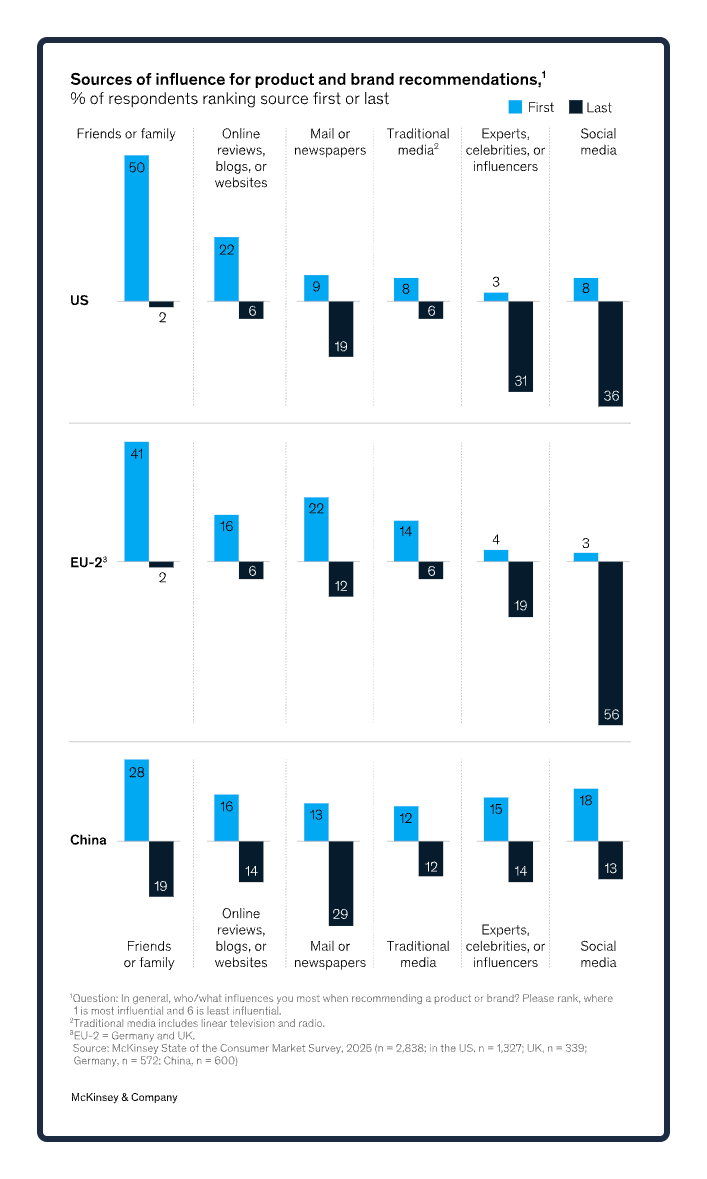
While many of us might name online influencers, actually, we listen the most to friends and family:
What?
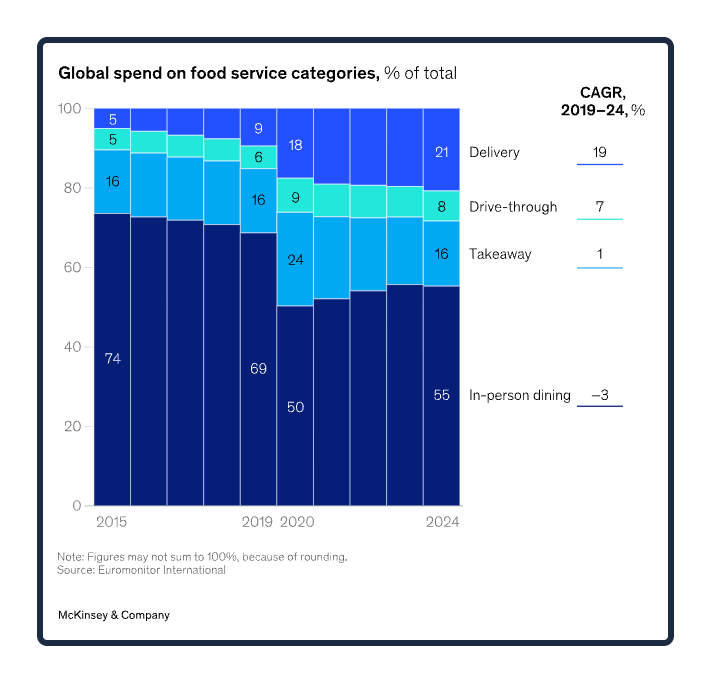
With in-person dining dipping, predictably, we are spending more on delivery and take-out:
Also, we’ve displayed a preference for the goods that come from nearby:
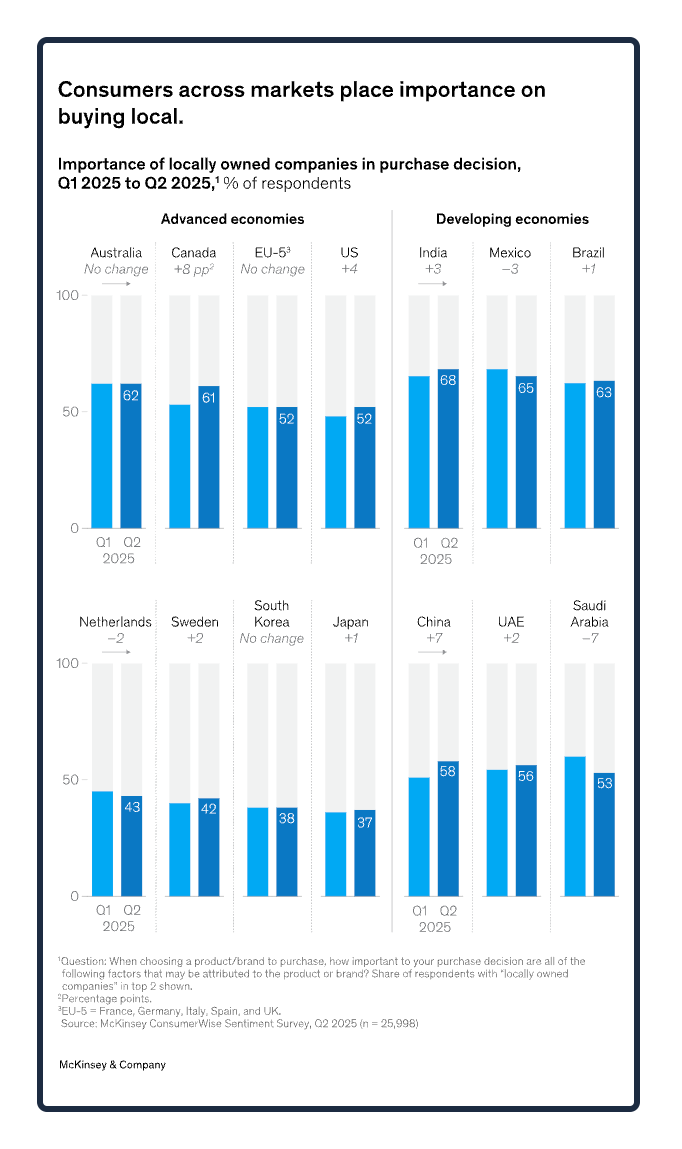
Perhaps contributing to all of these trends, McKinsey tells us that, since 2019, we spend more time alone and online. With the extra three hours of free time that U.S. consumers report they have, their hours wth family and friends remained flat. Instead, we exercise more, relax, shop, and focus on social media.
Meanwhile, the uptick in e-commerce was also true for consumers in China, Germany, and the UK. Similarly, but excluding China, German, UK, and U.S. consumers increasingly depend on grocery deliveries.
Our Bottom Line: Consumption Expenditures
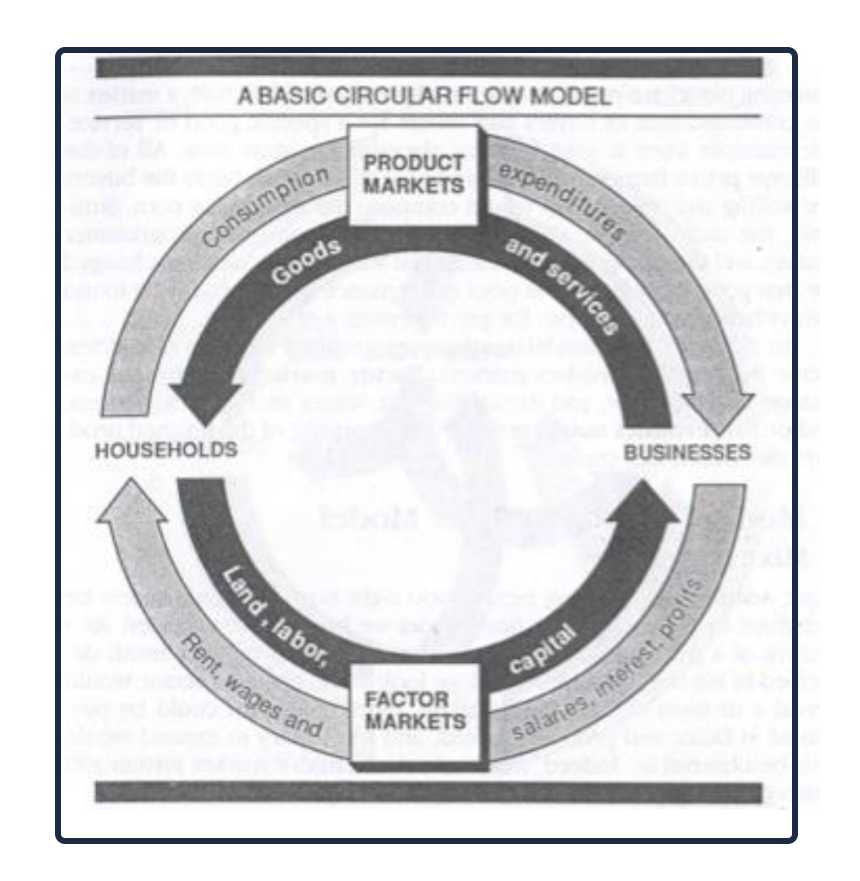
As a yardstick of the dollar value of the goods and services a nation annually produces, the GDP has four components. At 68.2% (or so) in the U.S., our consumption expenditures are the GDP’s major propellant. Next, gross investment is mainly a business category except for its residential section. Then, we have government spending as the third big category, and finally, a net exports (exports minus imports) component that is typically negative.
Shown by the upper loop of a model of our market economy, in return for our consumption expenditures, businesses provide our goods and services:
My sources and more: After reading about our shopping addiction in WSJ,, this McKinsey report was my next stop. I hope that also you will take a look at this recent econlife post.