Subscribe to our RSS feed
EconLife.com connects economics to everyday life, current events and history.

Tag Archives: Argentina

The 2016 Olympics in Rio might be different.

At the 1996 Atlanta Olympics, Great Britain fared poorly. They took home only one gold and ranked #36 among medal winners. At Beijing in 2008, their medal count was 47 and they ranked #4. And now in London, 2012, they are faring even better. What happened?

After Atlanta, the UK decided to elevate their Olympic performance. With money from the national lottery, they funded athletes’ living expenses, training, nutrition, physiotherapy. Combining world class coaches, talented athletes, consistent funding and wise leadership, they got Olympic gold.

Or, we could say that…

TALENT times MONEY equals MEDALS.

And that takes us to Rio De Janeiro, Brazil and August 5, 2016. Western Europe and the US have been top Olympic medals winners. However, emerging economies are becoming more affluent and allocating more resources to women. Argentina is using a levy on mobile fund subscriptions to fund elite sports. Former communist nations continue to focus on athletic performance. Meanwhile though, most euro zone nations have less money to spend.

Does a shift in worldwide affluence portend a new Olympic order?

To see the current Olympic ranking, this Huffington Post interactive is superb. It not only presents bubbles to show medal winners but then weights them according to GDP and population. Based on her GDP, for example, teeny Grenada is actually faring quite well. The Guardian was my source for information on the UK Olympic turnaround and I found the Olympic “success” formula in an insightful FT article. This Globe and Mail article is also excellent.

Posted by: adminEcon
Tags: , , , , , , , , , ,
Comments (0) Add a Comment

apple

By Mira Korber, guest blogger.

While wandering the streets of Buenos Aires, I wondered why the shop windows seemed devoid of any new Apple products. Electronics stores touted the antepenultimate model of the iPod Nano as the new (overpriced) great thing. I was the only person I saw with an iPhone.

Regarding the iPhone, my Argentine homestay family even told me, “It just isn’t that big here.” Here’s the basic reason why, as illuminated by this fascinating Wall Street Journal article:

Argentina is currently employing protectionist policies. The “impuestazo,” or “Big tax” set in place by President Cristina Kirchner doubles the value-added tax (VAT) on electronics imported from other countries. The government has also significantly lowered industry taxes in Tierra del Fuego, where the non-Apple electronics are produced, to incentivize more growth.

The goal is to keep jobs and capital within Argentina, even if it means the price of electronics (domestically and internationally made) will skyrocket for consumers. Jobs in the electronics industry numbered 3,500 before the Big Tax; now the December employment peak clocks in at 13,500.

High prices for even domestically produced electronics result from inefficient assembly, storage, and transportation methods used in Tierra del Fuego, Ushuaia (the southernmost tip of South America). Component parts travel as follows: Asia –> Buenos Aires –> Ushuaia for assembly –> Buenos Aires for sale.

It also turns out that iPhones are now not only uncommon in Argentina, but banned from commerce. To get one, citizens have to buy them on their travels outside the country.

The Economic Lesson

Protectionism and tariffs (taxes on imported goods) prevent free trade. Read about the tariff of 1828 in the United States and the problems it caused.

And read here about how Argentine protectionism is affecting American exports.

An Economic Question: How would a tariff affect the curves on a supply and demand graph? What would happen to prices?


Posted by: adminEcon
Tags: , , , , , , , , , ,
Comments (0) Add a Comment

16860_pesos

By Mira Korber, guest blogger, Kent Place School alumna, Yale student, and recent traveler to Buenos Aires, Argentina. 

Venture down any avenue in Buenos Aires and you will certainly see tremendous lines coiling around the sidewalks as daily commuters await the infamous “colectivo,” or Argentine public transport city bus. Wait a while, then a while longer, and perhaps your bus will arrive quickly, perhaps not. But in the end, it’s worth the wait as your ride is so cheap, you can put up with a little unpredictibility. 

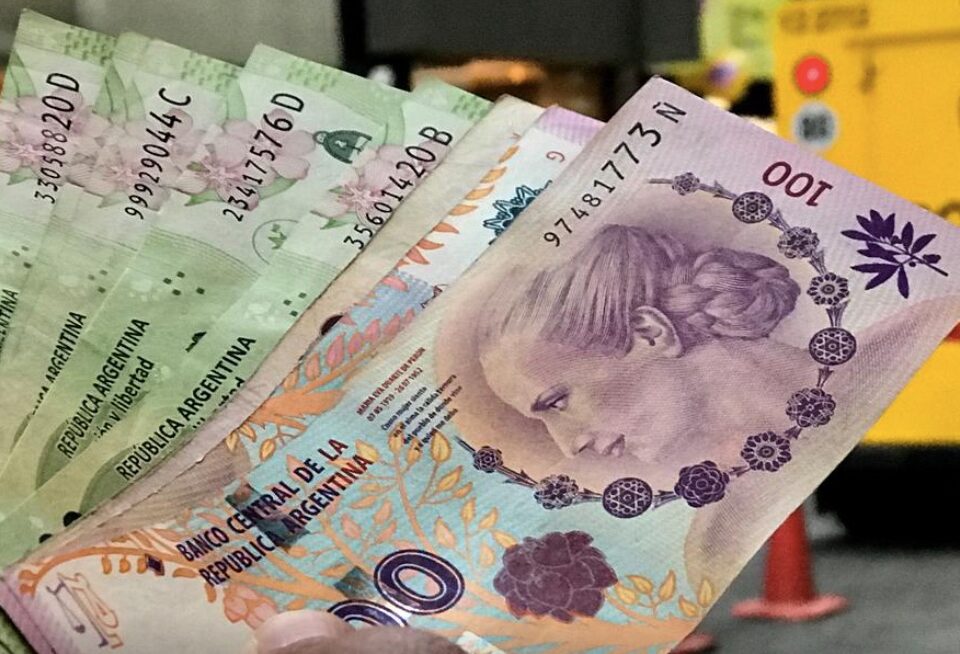
Climb aboard and spend only between 1.10 and 1.25 pesos for a ride anywhere in the city of Buenos Aires. But now, it’s going to cost you a few more “monedas” (coins). 

To ameliorate their massive national debt, the Argentine government has no choice but to cut back on national spending, some of which is dedicated to subsidizing the “colectivo” system.

Subway fares have already increased by 127% — to 2.50 pesos (.58 US cents) and colectivos could raise their 2012 rates by as much as 3 pesos. Additionally, the considerable water, gas, and electric subsidies are on their way out; 260,000 Buenos Aires residents living in affluent neighborhoods have lost all government assistance.

In 2011, the government doled out almost 69 billion pesos (approx. $16.4 billion USD) in subsidies, the largest recipients being energy (60.4%) and transportation (27.9%). A remaining 31.9 billion pesos went towards social welfare programs.  

Try out these interactive subsidy graphics at LaNación.com, one of Argentina’s most prominent newspapers; you can find month-to-month costs of subsidizing buses. And here, you can find an interactive map of public transport prices around the world as well as an animated representation of the elements fueling each bus, the “colectivo porteño.”  (NB. “recorrido” = route, “usuario” = user, “boleto” = ticket, “subsidio” = subsidy.)

Read here about why such extensive subsidies were implemented in the first place, and how the proposed 2012 subsidy cuts will only comprise 4.8 billion of privately estimated expenditure of 70 billion. 

The Economic Lesson

Government subsidies exist to (1) help boost industries, (2) encourage businesses to hire more employees, and (3) ease living costs for a country’s residents. By keeping prices artificially low, Argentina experienced tremendous growth in the years following economic crisis in 2001-2002. In 2011, the Argentine GDP measured up at 8.3% (see bottom of article).  But now, due to subsidy lifts that will turn up the heat on already-high inflation (privately estimated around 25%), the economy’s 2012 GDP is projected to be only 2-3%. 

Posted by: adminEcon
Tags: , , , , , ,
Comments (0) Add a Comment

16858_fryingpan.1.10_000001212996XSmall

By Mira Korber, guest blogger, Kent Place School alumna, Yale student, and recent traveler to Buenos Aires, Argentina. 

In Argentina, a $100 USD bill is a hot item.

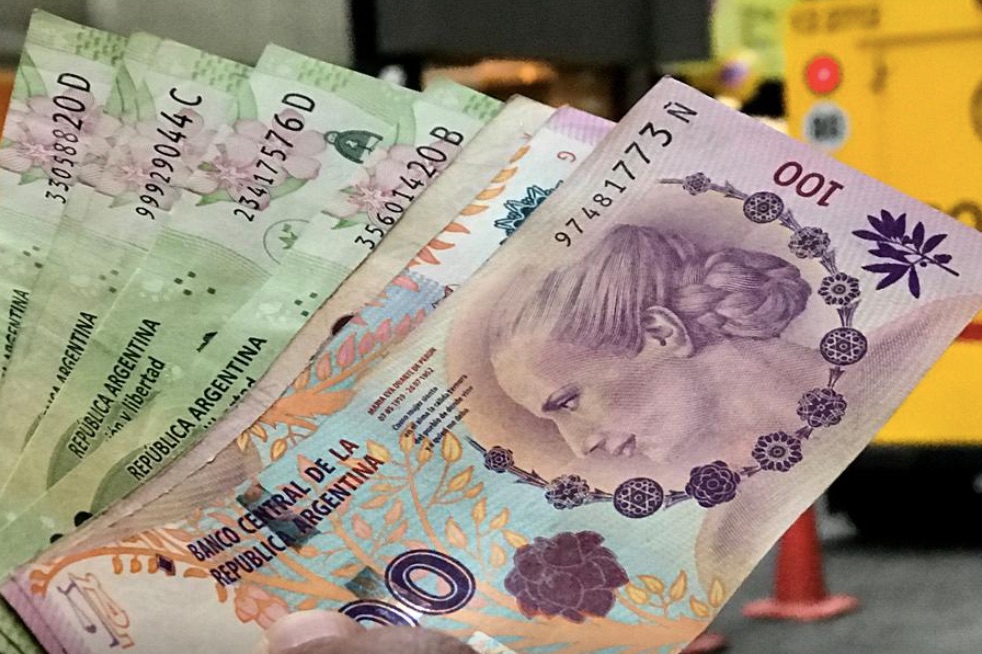
And though Argentines want US dollars — for traveling, saving, or otherwise — they cannot get them easily. Government imposed restrictions prohibit citizens from withdrawing any currency other than pesos from the bank. 

Despite this, Argentines are attempting to access their funds in dollars due to mistrust in the global economy. They fear losing their savings as they did in 2001, when the peso was devalued over 300% and unpegged from the US dollar. 

After Argentina defaulted on its loans from the IMF, it imposed the “corralito;” in other words, savers could only withdraw $250 USD each week from their bank accounts. Argentines began protesting by whacking pots and pans, a phenomenon known as the “cacerolazo” before disintegrating into fully-fledged protests against the economic mismanagement of their country. 

Read an explanation of how the 2001 crisis unfolded here.

The Economic Lesson

An economic definition of money states that it must be a unit of value, medium of exchange, and store of value. The Argentine peso should function in all three arenas, so why are citizens seeking US dollars in the first place? Globally, whenever a country experiences stormy economic conditions, citizens tend to seek refuge in a currency that they know is a legitimate store of value — in the long run. Now, 10 years after the riots of 2001, it appears that Argentines fear their pesos will devalue drastically again if economic disaster strikes for a second time. They turn to dollars as a symbol of security. 

Posted by: adminEcon
Tags: , , , , , ,
Comments (0) Add a Comment

16706_2.20_000005476580XSmall

Nobody wants Greece to become Argentina.

It all began with what scholars Rogoff and Reinhart called the lending boom of the 1990s. Enjoying the influx of dollars, Argentina borrowed and grew and prospered…for awhile.  But when recession hit at the end of the decade, the good times quickly unraveled. She defaulted on $95 billion (p. 19) of sovereign debt while also undergoing banking, currency, and inflation crises.

Some say a part of the problem was her inflexible currency. To combat 3,000% hyperinflation Argentina had tied her peso to the dollar. Yes, she got a stable currency. But also, she lost the ability to make her currency cheaper when a recession threatened and her export revenue needed a boost.

Is Greece similar? She too has a massive debt, a damaged economy, and the inability to manipulate her own currency. And, were she to default, her connection to banks throughout the euro zone and beyond could stimulate a banking crisis.

On the other hand, we could say that Argentina seems to be doing okay. True, she still faces a tough time borrowing. But, with control over her own currency, she was able to enjoy a booming export sector and a growing economy.

Here, NPR’s Planet Money discusses Argentina in “The Price of Default.”

In “Default Deja Vu” econlife looked a serial defaulters.

The Economic Lesson

Alexander Hamilton surely knew about sovereign debt defaults and wanted to avoid them. Reading about his plan to fund and refinance the United States’ revolutionary war debt reveals his commitment to establishing our good credit. His approach was varied, including issuing new bonds to pay for those outstanding and servicing the interest promptly on the foreign debt. It worked. Even those in Holland, then the financial capital of the world, displayed confidence in our public credit. Adhering to the Hamiltonian philosophy, the United States has never defaulted on its debt.

An Economic Question: One debt rating agency said that congressionally gridlocked budget negotiations could affect worldwide confidence in the safety of U.S. debt. Your opinion?

Posted by: adminEcon
Tags: , , , , ,
Comments (0) Add a Comment