Subscribe to our RSS feed
EconLife.com connects economics to everyday life, current events and history.

Tag Archives: climate change

19th Century Urban Transport Was An Environmental Problem

Asked if they want lower gasoline taxes that make more driving affordable, people typically say, “Yes.” Told that the only electricity for a village in India is from coal-fired plants, most people will say it’s okay.

When making decisions about driving and electricity, we tend to observe the iron law of climate policy. Choosing between economic growth and reducing emissions, we take growth. Or, as a Chinese climate negotiator said during a Peking University speech, “I cannot accept someone from a developed nation having more right than me to consume energy…We do not want to pollute as they [the Americans] did, but we have the right to pursue a better life.” Correspondingly, The Economist asked people in the U.S. how much they would be willing to spend, per household, per year, on a climate bill. While $80 got majority support, $170 did not, and, at $770, opposition was overwhelming.

As The Climate Fix author, University of Colorado professor Roger A. Pielke said, “The iron law of climate policy says that even if people are willing to bear some costs to reduce emissions, they are willing to go only so far.”

How then to break the “iron law?” We will look at proposals tomorrow.

The Economic Lesson

Entering the realm of behavioral economics, science writer Jonah Lehrer suggests that we are less willing to select alternatives that provide short term loss and long term gratification. His example, in How We Decide, was people’s credit card excesses and how “…our emotions…tend to overvalue immediate gains (like a new pair of shoes) at the cost of future expenses (high interest rates).

An Economic Question: How does Jonah Lehrer’s credit card example relate to climate change policy?

Posted by: adminEcon
Tags: , , , , , , , ,
Comments (0) Add a Comment

16062_7.7_000004061067XSmall

Have you been paying more for gas? Looking at this map, you can see that gas prices around the country have been rising in most places.

Economist James Hamilton suggests that the price of gas is directly connected to the GDP. Citing the BEA breakdown of consumer spending, he points to 4% as a threshold. If consumer outlays on energy goods and services exceeds that 4% level of total spending, then the economy will “stumble.” The auto sector, he says, is especially vulnerable because SUVs and light trucks are again sales leaders.

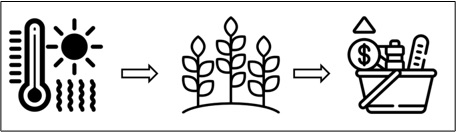
This takes us to a fundamental dilemma. Higher prices mean less energy consumption but they tug GDP growth downward. As this analyst states, “…the administration has to decide whether climate change is the most important matter at hand, in which case any energy-induced recession is worth the price; or whether the health of the economy is of paramount importance, and any climate policy must be subordinate to that.”

Agreed? Or a third alternative?

The Economic Lesson

In a reader friendly (but lengthy at 70 pages) paper, “Reflections,” the Bureau of Labor Statistics (BLS), describes the changes in consumer spending during the past century. Looking at NYC and Boston, in 1901, a typical family earned $750 while by 2002-2003, that same family would have taken home $50,302. Adjusted for inflation, the increase was close to a 4.5 multiple. So, from $750 in 1901, a NYC family would have been earning, in real terms, $3023 annually in 2003. The report conveys great facts about consumers then and now.


Posted by: adminEcon
Tags: , , , , ,
Comments (0) Add a Comment