Subscribe to our RSS feed
EconLife.com connects economics to everyday life, current events and history.

Tag Archives: congestion pricing

Our Transportation Infrastructure is Crumbling

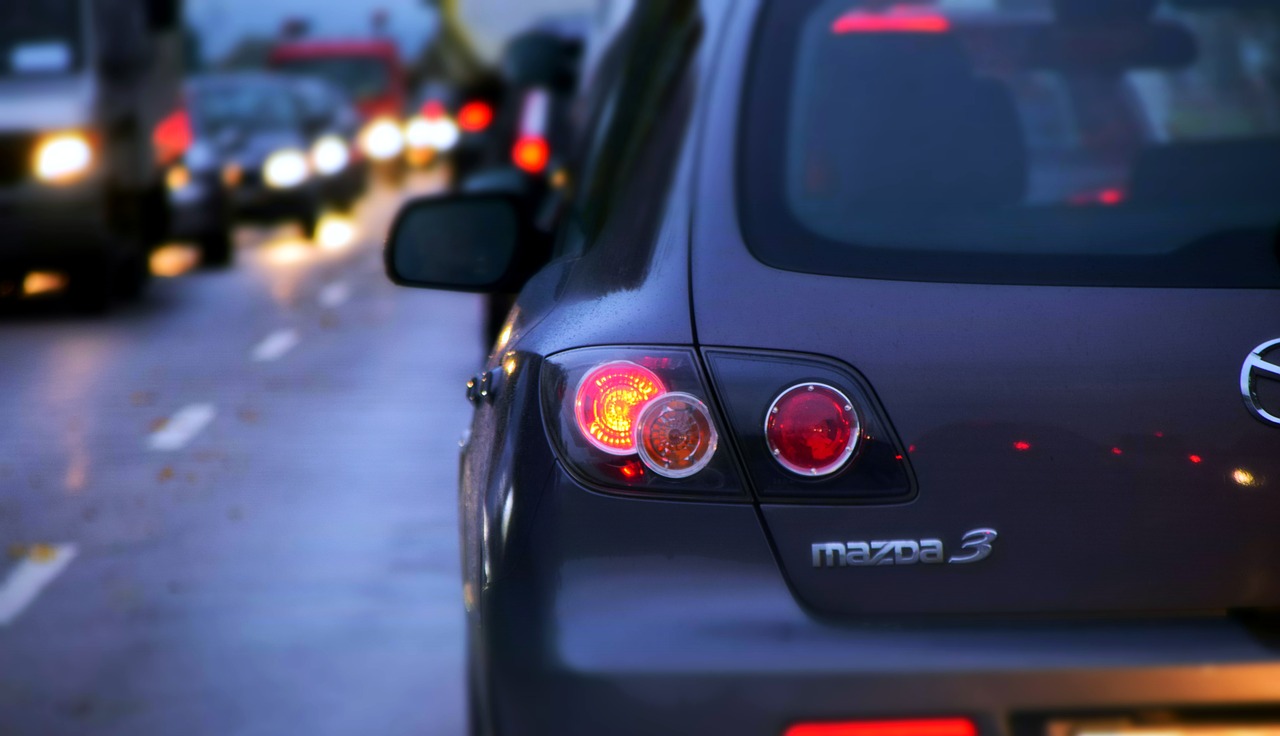
Moving 5 MPH in rush hour traffic, do you ever think that you are the problem?

In rush hour traffic, we create an extra 4 second delay for each car behind us. Add it all together and you get 4.8 billion hours that people wasted during 2010 in traffic. For the average commuter, the annual total is 34 hours and 14 gallons of fuel.

Reasons for traffic congestion? We all work at approximately the same time every day and the richer we get, the more cars we can buy. As Brookings scholar Anthony Downs points out, “…traffic congestion is not caused by poor policy choices but rather, by economic success.”

Ironically, sometimes reducing congestion only winds up making it worse. Once you add to mass transit or road capacity, people who avoided rush hour join it. Congestion pricing programs? They are controversial and you need the right geography. Mass transit? People tend to combine rail lines with car commuting and home buying decisions that sometimes exacerbate the problem.

Consequently, we all continue creating the costs of traffic congestion that are called negative externalities. Rather like a factory’s air pollution can affect the health of people who have no connection to the factory, driving during rush hour imposes a cost on multiple unknown individuals. The 4.8 billion wasted hours from congestion is only a part of the cost.

Where does this leave us? Maybe traffic congestion is part of what we pay for economic growth.

Sources and Resources: Economist Timothy Taylor presents a wonderful lecture on traffic congestion in his Teaching Company course, “Unexpected Economics.” His lecture took me to this Washington Post article by Brookings scholar Anthony Downs and the Texas Transportation Institute (Texas A&M University) annual report on traffic congestion. Also, I always enjoy returning to sections of Traffic by Tom Vanderbilt. For this post I reread his chapter, “Why More Roads Lead to More Traffic (and What To Do About it)”

Congestion’s Impact From the Urban Mobility Report

From the 2011 Annual Urban Mobility Report

From the 2011 Annual Urban Mobility Report


Posted by: adminEcon
Tags: , , , ,
Comments (0) Add a Comment

Our Transportation Infrastructure is Crumbling

Which alternative would you select to lessen rush hour traffic on NYC’s 5th Avenue?

  • Charging $10 for each block
  • Having the chance to win a $10,000 lottery prize if you take the bus


A Stanford professor is encouraging cities like Singapore to use the lottery alternative to shape our commuting behavior.

Trying to shift rush hour mass transit use to off peak times, Singapore is experimenting with discounts or the chance to win a lottery for people who switch. Now in its 6th month, the program has reduced peak ridership by 10% with the lottery alternative by far the first choice.

Still though, the response to positive incentives has been mixed. Citing the congestion pricing program proposed by Mayor Bloomberg and rejected by the NYS legislature, proponents of a more positive approach say it has more of a chance of being implemented. On the other hand, one opponent said that “little carrots” such as the chance to win a lottery are insufficient in a big city. A second expert warned that we should carefully choose our targets because incentive programs can have unintended consequences.

Where does this leave us? For commuters, rush hour takes more time and perhaps more energy. For municipalities, rush hour requires extra buses, trains and people that are underutilized at other times. If rush hour ridership can be reduced, then time and money can be saved.

So, recognizing that rush hour is costly, we can return to 5th Avenue.

The NY Times, here, The Economist, here,  and Stanford University, here, all have explained the positive incentives proposed by Stanford professor Balaji Prabhakar to shift commuting habits. Meanwhile, at econlife, here, we have discussed the high cost of free parking.

Posted by: adminEcon
Tags: , , , , , , ,
Comments (0) Add a Comment

16398_3.14_000009455162XSmall

If extra road mileage is built, would you predict more or less traffic?

The WSJ tells us that more roads led to additional driving from local residents, commercial traffic and people moving to the area. Public transportation did not influence driving decisions. Roads did. 10% more road mileage meant 10% more driving.

The Economic Lesson

Here is where economics enters the picture. This is all about cost. If we want people to do less of something, their cost needs to increase. With roads, the problem was traffic congestion. The solution, more roads, did not work because it did not increase cost. It made driving more attractive. As a result, the authors of this study conclude that the answer is congestion pricing. 

Similarly, looking at auto emissions and housing, again, cost makes the difference. For emissions, higher gas prices would reduce emissions. For housing, lower prices will increase sales. And yet, hasn’t public policy been the opposite?

An Economic Question: For auto emissions, assume your goal is diminished gasoline usage. For housing, your goal is more home purchases. Describe what will happen to demand and supply if cost is used to achieve the desired objective.

Posted by: adminEcon
Tags: , , , , , , ,
Comments (0) Add a Comment

Run privately, guaranteeing 70kph (43.5 mph), a toll lane will be created on a busy Israeli road. More traffic–price up; less traffic, price drops. Another solution to the tragedy of the commons.
To read more, go to http://www.jpost.com/servlet/Satellite?cid=1260930882954&pagename=JPost/JPArticle/ShowFull

Should we be concerned that a toll road is regressive?
Regressive: those who are less affluent pay a higher percent of their income than those that earn more.

Tragedy of the Commons: When a resource is shared by many rather than privately owned, it tends to be “misused” or “overused”. For a pasture, “misuse” is over grazing; in the ocean, fish populations are depleted; in the air, factories pollute.

Posted by: adminEcon
Tags: , , , ,
Comments (0) Add a Comment