Subscribe to our RSS feed
EconLife.com connects economics to everyday life, current events and history.

Tag Archives: Erie Canal

texting is 20 years old

An internet connection and a canal could be rather similar.

Internet Connections in the Americas, 2012:

Internet Connection Speeds Americas

Looking beyond the Americas, South Korea leads the world with the highest proportion of its population having fast internet service (more below).

Shipping Connections Between Cincinnati and New York, first half 19th century:

  • In 1817, by river and wagon: 52 days.
  • In 1843, by steamboat, canal and railroad: 18-20 days.
  • In 1852, by canal and river: 18 days.
  • In 1852, by railroad: 6 to 8 days.


But that was not all. The cost plunged. Sending your shipment by land in 1821 would have cost $32 a ton for 100 miles. By rail in 1853, you would have spent less than $4.00 a ton for the same trip.

The connection?

Nineteenth century shipping speed and the internet are both about infrastructure. Almost 200 years ago, by building a canal network and then railroads, we created a transportation infrastructure that brought us all closer in the US and beyond. Now, with the internet creating an information infrastructure, again, we are even closer because of our accelerated ability to communicate.

The impact?

During the nineteenth century, a transportation “revolution” enabled a national market and regional specialization to flourish. It permitted us to enjoy David Ricardo’s comparative advantage with producers growing and manufacturing optimally. It fueled economic growth.

Are the fastest and most widespread internet connections also fueling economic growth–or is it the reverse?

Worldwide High Speed Internet Connectivity

Sources and Resources: This Quartz article has a brief summary of this Akamai report,”State of the Internet” that was the source of the above infographic and information on connectivity. For more on worldwide internet facts, you might want to look at this broadband report from the OECD and for David Ricardo and comparative advantage, econlib.org is always useful.

Posted by: adminEcon
Tags: , , , , , ,
Comments (0) Add a Comment

lightbulb

In a 1964 TV commercial, during a pouring contest between 2 young boys, Heinz ketchup was “…too thick and rich to run.” In another ad, Heinz lost an OK Coral duel because it was the “slowest ketchup in the west…east, north and south.”

Now though, Heinz might have a problem.

Trying to develop a super slippery coating that would prevent deep sea oil pipes from clogging, scientists in an MIT lab created LiquiGlide. Used on the surface of a Heinz plastic container, LiquiGlide makes ketchup slide right out.

I suspect Heinz might not want its ketchup to pour more quickly.

However, even if the private cost to Heinz is considerable, citing the time millions of people would save, an economist would look at how the social benefit–the positive externality–is much greater. And that is why this story is about a lot more than ketchup.

Here you can see fast flowing Heinz Ketchup and here, a 1964 Heinz Ketchup race. And, if you are interested in reading about super slippery surfaces, this article describes the work of a Harvard lab.

Posted by: adminEcon
Tags: , , , , , , , , ,
Comments (0) Add a Comment

broccoli...16784_3.17_31000008087744XSmall

Being a locavore can be confusing. Eating broccoli from the local farm stand tastes good and makes many of us feel good. It is a pleasure to support local farmers and get vegetables the day they were picked.

On the other hand, inefficiency is one huge problem.

Specializing makes economic sense. Almonds, strawberries and grapes should come from Californians because their weather and soil conditions optimize output. Warm days, cool nights and fertile volcanic soil make Idaho one of the best places to grow russet potatoes. Concerned about carbon emissions? It is likely that the inefficiencies of local production more than offset the carbon emissions from long distance transportation.

And yet, proposed legislation from an Ohio Senator and a Minnesota Congresswoman, The Local Food, Farms and Jobs Act, supports small farm production. Or as one of the bill’s sponsors said, “Making it easier for farmers to sell food locally and easier for consumers to buy it translates directly into a more healthy economy and more jobs in our communities.” By contrast, one researcher estimates that it means much less food production per acre and additional use of fertilizers and chemicals.

Do you support The Local Food, Farms and Jobs Act?

The Economic Lesson

Specifically linking Albany and Buffalo, the Erie Canal facilitated a national market in the U.S. As an inexpensive way to transport Midwestern farm produce, it let the Northeast focus on manufacturing.

As the efficiencies of specialization fueled economic growth, economist David Ricardo (1772-1823) would have been delighted.

An Economic Question: How did impact of the Erie Canal illustrate David Ricardo’s principle of comparative advantage?

Posted by: adminEcon
Tags: , , , ,
Comments (0) Add a Comment

15708_6.17_000006782680XSmall

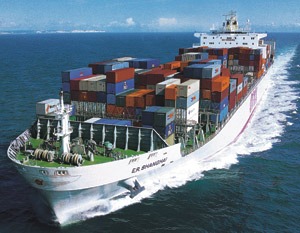
Reading about India’s inadequate railway system, I thought about the Erie Canal. Currently, massive freight containers that took four or five days to travel from Singapore to Mumbai will then take 28 days to reach New Delhi because trains and tracks are too congested. To continue growing, India will need a better transportation network.   

By contrast, during the nineteenth century, a transportation system of roads, canals, and railroads increasingly crisscrossed the United States. Dug between 1817 and 1825 from Albany to Buffalo, N.Y., the Erie Canal was the last link of an all-water route between the port of New York and the Great Lakes. Because of the Erie Canal, eastern manufacturers could easily trade with western suppliers of raw materials. Instead of traveling via slow and expensive overland routes, goods could move across the Erie Canal more cheaply and quickly.

Specifically, to ship freight 100 miles by land during the early 1820s would have cost $32 a ton. By canal, the expense dropped to $1 per ton. Several decades later, in 1852, moving over rivers and canals between Cincinnati and New York City, freight arrived in 18 days. By rail, it took 6 to 8 days.

The Economic Lesson

Canals and railroads could also be called capital. Defined as tools, buildings, and inventory, capital is crucial for economic development because it saves time and increases knowledge. Because capital investment involves postponing current consumption, India has politically difficult choices.

Posted by: adminEcon
Tags: , , , ,
Comments (0) Add a Comment