Subscribe to our RSS feed
EconLife.com connects economics to everyday life, current events and history.

Tag Archives: food prices

16392_5.26_000001734923XSmall

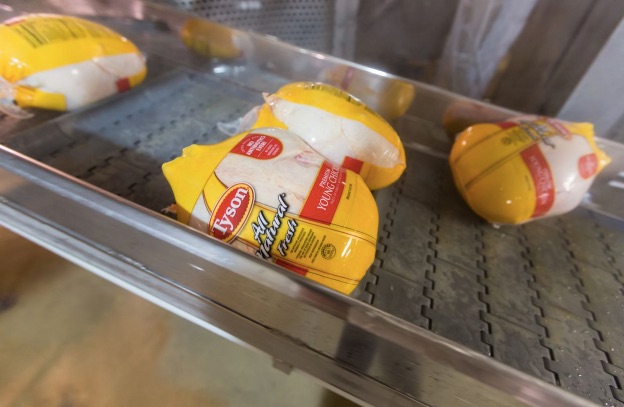
Shopping for your Memorial Day barbecue, you will pay close to 29% more than a year ago. According to the New York Post, not only is a gallon of gas up 44% in the NY area, but also, lettuce will cost you 28% more and tomatoes, 86%. In addition, the New York Post shopping list included hamburger meat, hot dogs, potato salad, supermarket ice cream and coffee.

Last March, NY Federal Reserve Bank president William Dudley tried, with little success, to convince people to focus on an increasingly healthy economy in which prices were not rising. “Today you can buy an iPad 2 that costs the same as an iPad 1 that is twice as powerful.” In response, one person in the audience said, “When was the last time, sir, that you went grocery shopping?”

The Economic Lesson

Still though, the Bureau of Labor Statistics (BLS) reports an annual inflation rate of 3.2% and an annual “core rate” of 1.3%.

How can we have such a discrepancy between respected stats and everyday reality? The key is the philosophy behind the yardstick we use to measure price increases, the Consumer Price Index (CPI). All agree that the CPI reflects the price of a market basket of goods and services. However, what should be in the basket?

As the source of the “all items” 3.2% inflation rate, the entire CPI market basket includes many goods and services beyond food and energy. Meanwhile, the 1.3% inflation rate is called the “core rate” because it excludes food and energy prices.

You might wonder why many economists respect the core rate. 1) They say that price fluctuations for food and energy are volatile; 2) Food prices are too dependent on such temporary circumstances as weather; 3) Compared to other goods and services, food prices play a lesser role in the economy; 3) Changes in food prices cannot be moderated by monetary policy.

An Economic Question: Explain why you believe the “overall rate” or the “core rate” is more valid for deciding whether inflation is a problem?


Posted by: adminEcon
Tags: , , , , ,
Comments (0) Add a Comment

16179_2.8_000006478541XSmall

With a typical Egyptian household spending 38.3% of its budget on food in 2008, you can see why soaring food prices could fuel turmoil. But what about the other side?

For Senegal farmer and trader, Ndeye Sarr Diop, rising rice prices were an opportunity. The world price is the key. Why grow rice if you can import it more cheaply? Moreover, why export it if no one will buy it? In 2008, with prices soaring, expensive West African rice became desirable. Responding to the incentive, Senegalese farmers started planting. As Ms. Dopp said, “I hope rice will make me rich.”

The Economic Lesson

Hoping to encourage production and support farm income, countries subsidize certain crops. As a result, the selling price remains artificially low. Developing world farmers who receive no subsidy cannot compete. President Clinton is quoted here, concerned that Haiti has to import rice because U.S. subsidies make U.S. rice cheaper than theirs.

Saying that free trade was the answer, 19th century British economic thinker, David Ricardo (1772-1823) would have reminded us of comparative advantage and how subsidies distort world markets.

Posted by: adminEcon
Tags: , , , , ,
Comments (0) Add a Comment

16165_2.1_000009878576XSmall

When the rioting starts, where does economic activity stop?

In Egypt, gas and food were immediately affected. One owner of an Alexandria Mobil Station said he had not gotten a gas delivery for 2 days. The price of certain foods soared. One kilogram (close to 2 pounds) of beans moved from 35 cents to $1.70. Government subsidized bakers were also affected. No subsidies, no bread.

Meanwhile, large containers remained unloaded at major ports. Evacuating their employees, Coca-Cola and other multinationals, including banks, temporarily closed their offices. Volkswagen canceled deliveries and tour groups canceled their plans. Trying to prevent further declines, officials closed the Egyptian stock market while the country’s credit rating has been downgraded.

Still though, the one impact that could reverberate around the world has not happened. The Suez Canal remains open. A closed canal would add 10 days and 6000 miles to the length of oil shipments and further fuel an increase in its price. But, as one Forbes article points out, “floating storage,” the oil that is “sitting in tankers in the high seas,” would initially compensate for late deliveries.

The Economic Lesson

To get a picture of the government’s impact on the Egyptian economy before the riots began you might want to look at the Index of Economic Freedom where Egypt ranks 96 out of 179 countries. Here, the World Bank’s “Ease of Doing Business” index places Egypt at #94 from 183 nations. Last year though, it was #99.


Posted by: adminEcon
Tags: , , , ,
Comments (0) Add a Comment

16116_6.30_000005521931XSmall

Agree or disagree? “Both the jayhawk and the man eat chickens, but the more jayhawks, the fewer chickens, while the more men, the more chickens.”

The quote is from 19th century economist Henry George but it relates to a report from the FAO (Food and Agriculture Organization of the United Nations). Predicting that the world will have (approximately) 2.3 billion more people in 2050, the FAO  said we will need 70% more food production.

Can we do it? The debate continues between the doomsters and the boomsters. Saying production cannot keep up with population, doomsters like biologist Paul Ehrlich look back to Malthus. Meanwhile boomsters, like Julian Simon say that human ingenuity and the incentives of higher prices lead to more production.

The Economic Lesson

Where are food prices? Summarized by Bloomberg, currently sugar and oilseeds (which include soybeans, sesame seed, sunflower products, canola) have been the primary reason for a 25% climb since December, 2009. The last big jump was during 2008 when a 43% spike in the FAO Index reflected higher cereals and rice prices and led to food riots in poorer nations. A handy site for seeing the current state of food production in developing nations, country by country, is here

As economists we have so many variables! When the price of a commodity skyrockets, the result is less supply because the cost of production increases. On the other hand, as we saw with oil, when price goes up, it creates incentives on the supply side to, 1) produce more 2) innovate;  create an alternative.

Posted by: adminEcon
Tags: , , , , ,
Comments (0) Add a Comment