Subscribe to our RSS feed
EconLife.com connects economics to everyday life, current events and history.

Tag Archives: Hans Rosling

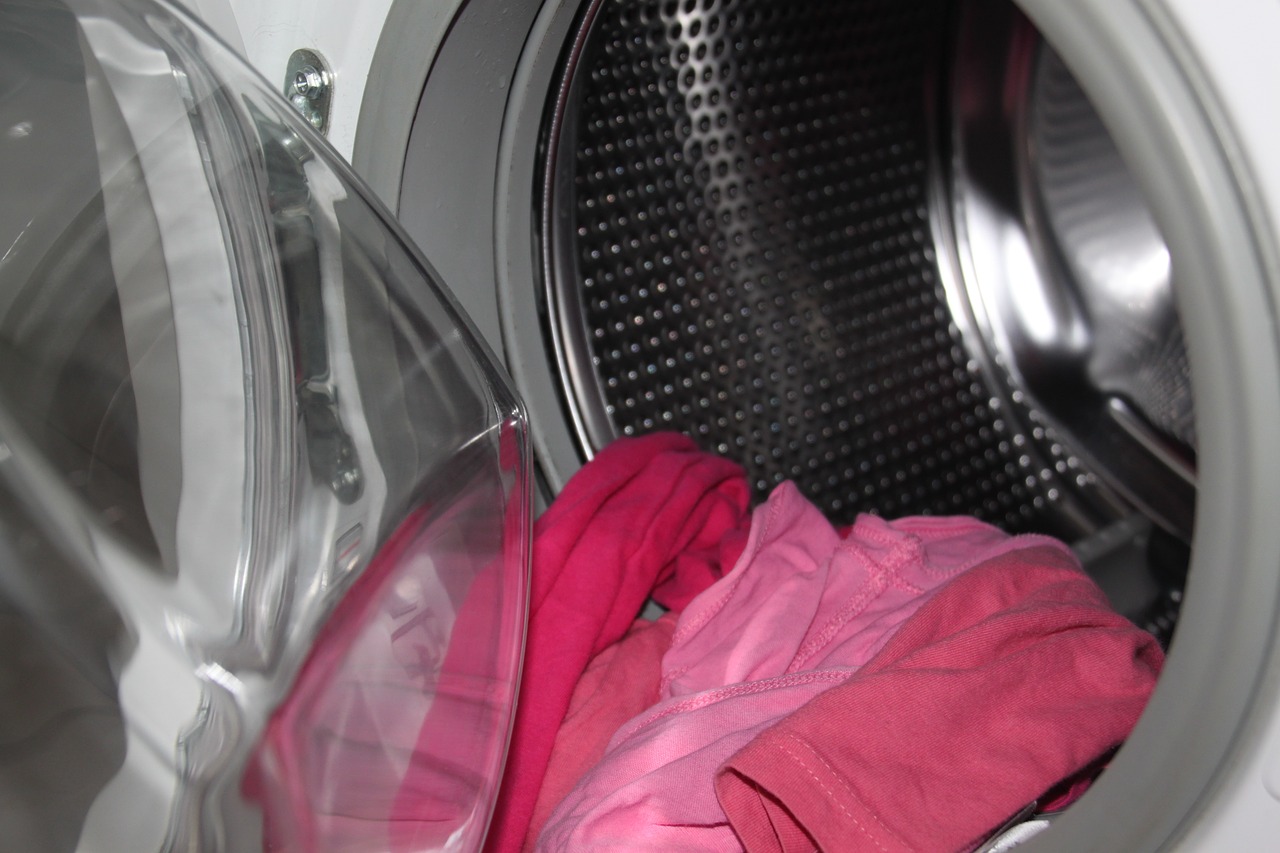
The Washing Machine Empowered Women.

A few thoughts about the washing machine…

To do a wash, the typical late 19th century woman had to boil the water, use her scrub board, wring out the water, hang up the clothes, and carry out the dirty water. For 4 children, she would have washed 40,000 diapers. During one week, doing the family wash would have occupied 7 hours.

In 1920, only 8% of all US families had washing machines. By the mid-1980s, the number had risen to 75%. Now, (see below) 90% of all homes built since the 1990s have washing machines.

Wonderfully conveyed by Swedish Professor Hans Rosling in a 9 minute TED talk, the washing machine is really a growth machine. By empowering women, the washing machine diminishes world poverty and facilitates the spread of childhood education.

Thinking of the GDP, the washing machine vastly increases a woman’s productivity and frees her to generate more human capital.

From The US Census Bureau:

(Dates indicate the year a home was built.)

Housing Differences By Year Built in the US

Monday Gender Issues Posts


Sources and Resources: Definitely, I recommend the Hans Rosling TED talk. It is excellent. Also, for a fascinating read about the 20th Century US Consumer (and the source of my washing machine facts), Stanley Lebergott’s Pursuing Happiness is excellent and the ideal source of evidence that 20th century consumerism did indeed improve lives. And, for good stats on home technology, you might want to look at the US Census paper (and source of the above table) on household “amenities.”

Posted by: adminEcon
Tags: , , , , , , , , , , ,
Comments (0) Add a Comment

Chinese Consumers and Fresh Apples

With this map of China, less is more. Called “The Nine Nations of China,” it resembles a simple color-coded jigsaw puzzle. 

Each of the 9 areas has a label that concisely states size, population, per capita GDP and the balance of trade. Consequently, scanning from west to east, you can compare affluence. For the balance of trade, you can quickly see that 7 of the 9 areas have surpluses. And the names, including “The Rust Belt,” and “The Frontier” and “The Metropolis” give economic clues. Meanwhile, if you want more information, the author provides a description of each of the 9 areas from his article in the Atlantic.

The Economic Lesson

Having nudged Japan out of the #2 spot, China has the world’s second highest GDP. While the total value of the goods and services produced in China during 2010 totaled $5.9 trillion, U.S. production was almost $15 trillion.  

And here, in a marvelous TED talk, as a sportscaster narrating a horse race, Dr. Hans Rosling describes the ascent of China and India. 

An Economic Question: As #3, how close is Japan’s GDP to China’s? 

Posted by: adminEcon
Tags: , , , ,
Comments (0) Add a Comment

16584_11.12_000007395743XSmall

The world is shifting.

More than one-half of the world’s car sales, mobile phone subscriptions and oil, copper and steel purchases came from emerging markets during 2010. Here you can see the same story through these export and import, global GDP, and foreign investment charts. Or, you can look at this Forbes slide show to see that half of the world’s self-made female billionaires are Chinese.

How to remember the emerging economies? Just think BRICs, MIST, and CIVETS. For the developed world, this list includes countries ranging from Australia and Austria to Spain, Sweden, Switzerland and the United States.

Memorably, in his 20 minute TED talk about the developing world, Hans Rosling asks us to “Let my dataset change your mindset.” 

The Economic Lesson

As emerging economies increase their participation in world trade, we can think of Adam Smith (1723-1790) and David Ricardo (1772-1823). In a factory, Adam Smith says specialize through division of labor. When each worker has a specific task, output multiplies. Increasing output requires bigger markets in order to sell what has been produced.  As mass production enables us to move from local markets to regional specialization to free world trade, as David Ricardo explained, the entire world benefits from the efficiencies of comparative advantage.

An Economic Question: After looking at iPhone component facts here, explain how the global economy has shifted.

Posted by: adminEcon
Tags: , , , , , , ,
Comments (0) Add a Comment

16276_6.9_000012771533XSmall

In one wonderful 9 minute TED talk, Swedish professor Hans Rosling connects the washing machine to empowering women, educating children and diminishing world poverty.

The Economic Lesson

When women are empowered, not only is the gender gap diminished but also the health and education of the household increases. 

In a Teaching Company lecture, about women and the global economy (lecture #31), Professor Timothy Taylor starts with explaining the world’s missing 100 million women; then he focuses on the importance of women being educated, of women having political power, and of women controlling household income.  

You might also want to look at a brief IMF paper called “Smart Economics,” in which the authors conclude that “…giving women more access to education, to markets (labor, land, credit) and to new technology, and giving them greater control over household resources often translates into greater well-being for themselves and their families.”

And finally, if you want lots of data, I recommend this 334 page, 2010 World Economic Forum Global Gender Gap Report. Ranking the gender gap for 134 nations, the report has Iceland with the smallest gap, the U.S. at #19, and Yemen last, at #134.

Posted by: adminEcon
Tags: , , , ,
Comments (0) Add a Comment

16072_3.27_000001882191XSmall

In one wonderful 4 minute animated video, Swedish professor Hans Rosling shows us how, during 200 years, 200 countries became healthier and wealthier. The turning point for one group of nations is 1810 with the industrial revolution. The next turning point, when the rest of the world starts to catch up, is 1948. With aid, trade, and technology, Dr. Rosling says almost everyone can arrive at the healthy and wealthy upper right hand corner of his graph (where his country bubbles will migrate).

But what about the future? This takes us to Dr. Rosling describing the ascent of China and India. In his TED talk, “Asia’s Rise How and When,” statistics never seemed so fascinating as when he describes, like a sportscaster narrating a horse race, how the income positions of China, India, Japan, the U.S., and U.K. have changed since 1858 and will gradually converge. When? He says 2048.

The Economic Lesson

Dr. Rosling says India and China will continue their growth trajectory if they avoid war and encourage health, education, electricity and infrastructure. It all reminds us of David Landes and The Wealth and Poverty of Nations. In The Wealth and Poverty of Nations, Dr. Landes explained why certain nations have experienced an increasingly better standard of living while others have stagnated. Among the variables he cites, physical capital which includes tools and machines, and human capital which involves education, entrepreneurship, and health, are most crucial for economic growth. Physical and human capital provide the highest ROIs (return on investment).

Posted by: adminEcon
Tags: , , , ,
Comments (0) Add a Comment