Subscribe to our RSS feed
EconLife.com connects economics to everyday life, current events and history.

Tag Archives: John Stuart Mill

15892_3.16_000012166514XSmall

I wonder if we should be concerned.

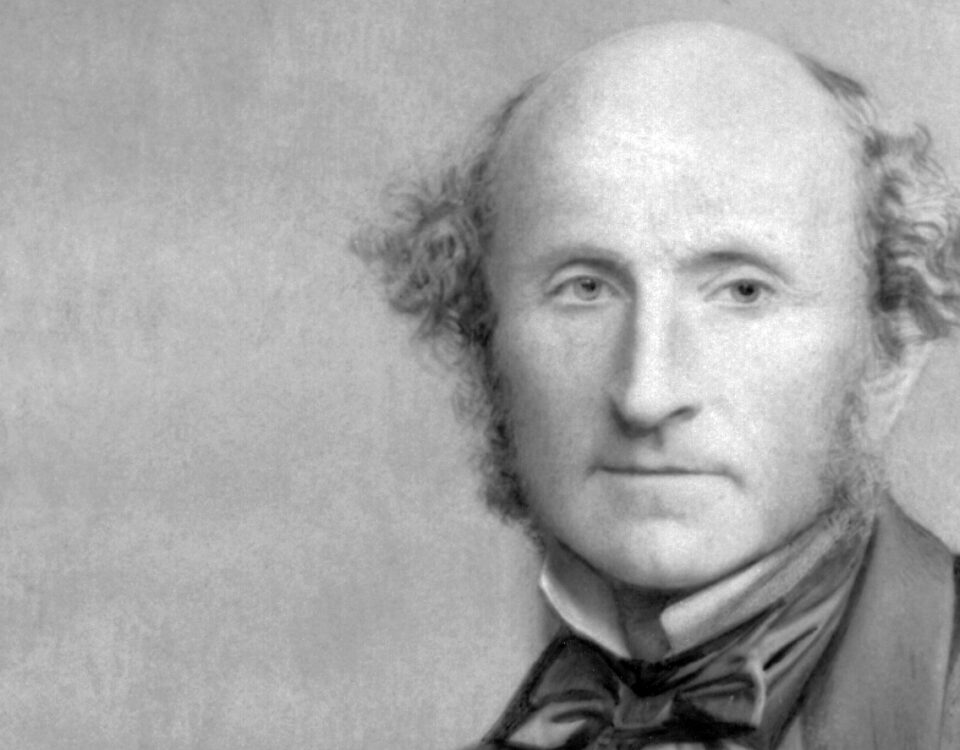
Lecture 32 of “Thinking About Capitalism” from the Teaching Company looks at John Stuart Mill (1806-1873), James M. Buchanan (1919-  ), and Mancur Olson (1932-1998). Concerned with the impact of democracy on capitalism, these economic thinkers focused on self-interested voters and politicians. Although their perspectives differed, they shared the view that self-interested politicians could favor voters who contributed little to economic growth. As a result, to perpetuate their power, politicians would support legislation that harmed the economy.

Fast forward to September 15, 2010. A front page Wall Street Journal article, “Obstacle to Deficit Cutting: A Nation on Entitlements,” explains that an estimated 45% of American households will not pay 2010 federal income taxes. Why? Because they do not earn enough or their credits and deductions eliminate their tax liability. Meanwhile though, close to 50% of all American households receive federal benefits. The article concludes that an increasingly smaller proportion of the American population is paying for the entitlements received by an increasingly larger number of Americans.

Will politicans be influenced more by those who pay or those who receive?

The Economic Lesson

Considered a liberal 19th century economist who firmly believed in individual freedom, Mill thought that those who were more educated should have greater voting power than the working classes who might outnumber them.

James M. Buchanan won the 1986 Nobel Prize in Economics for his work on “public choice theory“. Stated very briefly, his focus has been the importance of fixed political rules to thwart politicians’ self-interest.

Mancur Olson, in The Logic of Collective Action, explains that small groups can be more powerful than huge numbers of unorganized individuals who disagree with them. 


Posted by: adminEcon
Tags: , , , , ,
Comments (0) Add a Comment

15613_4.29_000010873669XSmall

Yesterday, President Obama briefly said that some salaries on Wall Street were more than anyone should earn. 

Approximately 160 years ago, John Stuart Mill responded by saying that he wanted to encourage work. Consequently, instead of limiting salaries through a progressive income tax, he supported a moderate proportional tax and high inheritance taxes. “To tax the larger incomes at a higher percentage than the smaller, is to lay a tax on industry and economy; to impose a penalty on people for having worked harder and saved more than their neighbors.” (1848, Principles of Political Economy)

Believing that all too often government distorts incentives, Adam Smith points out that people personally have less to give and spend when taxed. Government, Smith believed, was more likely to poison virtue than spawn it.

Not waiting for government, Ben & Jerry’s capped the salary of its highest paid executives at seven times the lowest pay. In 1994, though, they eliminated the cap when they could not find a new CEO who would accept it.

The Economic Life

Through a Teaching Company series on the history of economic thought, Professor Timothy Taylor discusses the life and ideas of Adam Smith and John Stuart Mill. They provide an ideal foundation to build from or tear down when contemplating salary caps and income distribution.    


Posted by: adminEcon
Tags: , , ,
Comments (0) Add a Comment