Subscribe to our RSS feed
EconLife.com connects economics to everyday life, current events and history.

Tag Archives: money supply

Gold Bars from NY Fed

In its basement, the NY Fed has a vault. A very safe place for countries or central banks or international organizations to store their gold, a shared home also makes it easy for countries to transfer bars from their pile to someone else’s when they need to.

During a recent visit, when my class was told that one country kept just one gold bar there, we asked who owned it. Our guide said he could not tell. But he did divulge that the Fed had sand bags ready if Hurricane Sandy had created an emergency. Also during a crisis, closing the airtight doors, a person probably had enough oxygen for 72 hours.

The Fed’s website says that in 2012, its vault held approximately 530,000 gold bars that weighed 6700 tons. Soon, they might have less. Or maybe they do already.

During January, the Washington Post reported that Germany wants to take its 674 tons back home. (I am not sure if Germany is taking all that it stores there.) The reason seems to relate to eurozone monetary crises. Analysts hypothesized that they just will feel better with it closer to home. Germany would not say when its $36 billion or so would be on a plane, a train or in a truck. (Remember Oceans 11? Die hard With a Vengeance?)

Meanwhile, in a recent column, NY Times financial writer Floyd Norris returned us to the gold or fiat money debate. To some, gold is the standard because they believe gold has intrinsic value. To others, the definition of money–a unit of value, a medium of exchange, a store of value-is all that matters. Then, it is okay to have central bankers use discretion to control the money supply rather than using the supply of gold that backs it.

But still, many point out that gold is just a commodity whose price tends to fluctuate because of a change in demand during financial crises. For 1980/82 and the Great Recession that started during December 2007, the price of gold soared (See below).

And that returns us to the gold vault. Should countries be using that gold to back money and thereby limit its supply?

Gold Price from Bloomberg

Sources and Resources: For more about why Germany wants its gold back, this Washington Post article was good while this Floyd Norris NY Times column on gold and the Fed’s gold vault description ideally complement each other.

Posted by: adminEcon
Tags: , , , , ,
Comments (0) Add a Comment

16805_cash register.12.14.11_000008894661XSmall

Paying with a phone swipe makes Starbucks lines move faster. Less time in line means more productivity and society benefits.

So, should we accelerate our movement toward a cashless society?

Imagine having no currency. No wallets necessary? A useless U.S. Mint? No seignorage to be earned by the Federal Reserve when it provides financial institutions with currency? 

Hoping to curtail tax fraud, Italy has banned cash transactions above 5000 euros and now is dropping the number to 1000.

Using a cost benefit approach, this academic study concluded that  society will benefit from cashlessness. One Slate columnist even hypothesizes that a cashless society can avoid recessions (but I am not so sure about that).

I wonder, though, if there are no dollar bills in several generations, what will come to mind when we picture a dollar.

The Economic Lesson

To be called money, a commodity needs 3 characteristics:

  1. It should be a medium of exchange. (People willingly use the commodity for exchange.)
  2. It should be a store of value. (In the future, it still will have relatively comparable purchasing power.)
  3. It should be a measure of value. (When someone says one dollar, you know what that means.) 

Today, in the U.S., the basic money supply includes cash, currency, travelers checks and demand deposits (checks). Thinking of ATM payments and the phone swiper at Starbucks, the traditional examples of the money supply are not quite working anymore.

An Economic Question: How might using cash affect a transaction?

Posted by: adminEcon
Tags: , , , ,
Comments (0) Add a Comment

16366_4.26_000006278830XSmall

Imagine a country where supermarket employees have to raise their prices several times a day, maybe by placing one price sticker on top of the old one. Describing Brazilian inflation during the early 1990s, one woman said she raced to food markets to see if she could beat the price rise. As told in this podcast, Brazil’s inflation rate was high.

However, it was nothing like Zimbabwe’s.

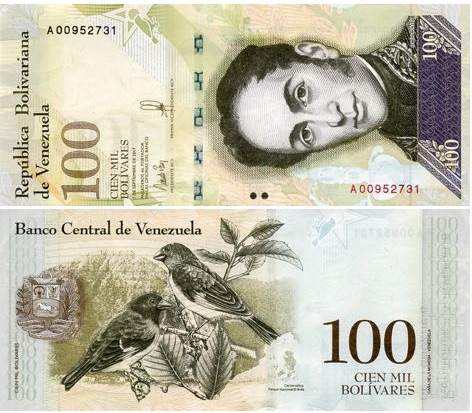
One economist has estimated that, by the time Zimbabwe replaced its own dollar with foreign currency during 2009, its annual inflation rate was close to 89.7 sextillion percent. So, you might think that the Zimbabwe dollar is worthless. Not quite. On eBay, a $100 trillion Zimbabwe dollar bill recently sold for close to $5 and currency collectors, looking for more, could push price up further.

Actually, Zimbabwe occupies second place for a world hyperinflation record. Hungary (July 1946) is #1 and Yugoslavia (January 1994) is #3.

The Economic Lesson

There are two basic ways that textbooks explain inflation:

1) Let’s assume that changes in supply relate to land, labor and capital. So, if a central bank increases the money supply, it will not affect supply. More money? Constant supply? The result is inflation.

2) Too many dollars chasing too few goods creates “demand pull” inflation; when the cost of land, labor, and/or capital rises, we have “cost push” inflation; inflation also can result when one item that is central to an economy, such as oil, becomes more expensive.

An Economic Question: Imagine living through a hyperinflation as a consumer, as a worker, or as a business owner. How would you explain the different challenges?


Posted by: adminEcon
Tags: , , , ,
Comments (0) Add a Comment

16060_12.11_000010906726XSmall

Our story begins with the United States announcing that it would be issuing a state-of-the-art new $100 bill. Designed to thwart counterfeiters, the new bill has 3-D interactive features. Move the bill and certain shapes and colors shift.

The bill, though, has encountered a huge glitch that delayed its production. Because it creased on the assembly line, parts were blank. Not all were defective, but no one is sure how many. With more than one billion bills being printed, a manual check could take 20 years. The goal now is to develop a mechanized check-up system. Summarizing the situation, one official said, “There is something drastically wrong here.”

A Planet Money podcast points out that anyone abroad who does not trust the local currency tends to hold US dollars. The chairman of the Fed, Ben Bernanke, said that, “We estimate that as many as two-thirds of all $100 notes circulate outside the United States.” The Fed, though, has a “missing currency” puzzle because they can approximate how much currency should be circulating but are not exactly sure of who has it.

According to the Federal Reserve, $100 bills typically have an 8.5 year life span. Who then will be affected at home and abroad if worn out bills cannot be replaced?

The Economic Lesson

A dollar bill is just a rectangle made of cotton (3/4) and linen (1/4). However, we call it money because it has three basic characteristics. 1) It is a medium of exchange. 2) It is a unit of value. 3) It provides a store of value.

Knowing that 100 U.S. dollars will consistently be worth close to 100 dollars makes U.S currency universally desirable.

Posted by: adminEcon
Tags: , , ,
Comments (0) Add a Comment

Having just followed the probable travels of a dollar bill at “wheresgeorge,” I’ve been thinking about money. Money is more than coin or paper currency. Because we can easily spend our demand deposits (checking accounts) and savings accounts, they too are money. Anything that people accept as payment, know the value of, and stores value can function as money. 

At wheresgeorge.com, you can register a dollar bill and then trace its life if its holders record their transactions. Between Marc 5, 2002 and March 5, 2005, a certain dollar bill traveled from Dayton, Ohio to Rudyard, Michigan with stops in Kentucky, Tennessee, Florida, Texas, Louisiana, and Utah. Along the way, the dollar saw a food mart, a race track, and a McDonald’s. Its last recorded user said the bill “was getting pretty old looking.” At that point, we can guess that the bill was retired at a Federal Reserve Bank by someone’s local banker.

According to the Federal Reserve, in 2007, located primarily abroad, there was approximately $829 billion of coin and paper currency in circulation. In the United States, if banks need more cash (maybe Mondays when ATMs are most popular), they withdraw it from the Federal Reserve bank in their area. On the other hand, when they have too much cash, banks take it to the Fed. At that time, the Fed destroys close to one third of the bills they receive.

With the life span of a typical dollar 1.8 years, the bill traced by “wheresgeorge” lived to a ripe old age but not as long as most hundred dollar bills which live 7.4 years.  It cost the Bureau of Engraving and Printing four cents to make each bill. 

The Economic Lesson

All of this matters because the money supply has an impact on business activity. If there is too much money circulating, then its value can plummet. It fell so much in Zimbabwe recently that people needed wheelbarrows or U.S. money to buy milk. On the other hand, when there is too little money, producers have less incentive to create goods and services because people do not have enough money to spend. During the recent recession when credit froze, less money passed from hand to hand and businesses produced less.

The Equation of Exchange, MV=PQ, illustrates the connection between the money supply and production (the G.D.P.). Here “M” equals the money supply; “V” is velocity, the number of times the same dollar is used; “P” is the average price of goods and services and “Q” is their quantity. 

Posted by: adminEcon
Tags: , ,
Comments (0) Add a Comment