Subscribe to our RSS feed
EconLife.com connects economics to everyday life, current events and history.

Tag Archives: Mount Everest

16898_Mt.Everest.1.30_000011597235XSmall

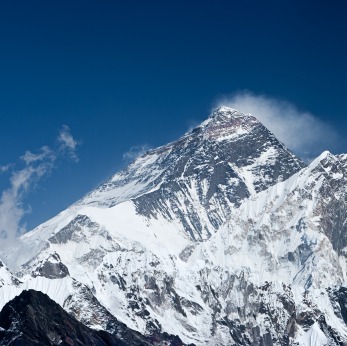
Having no inclination to climb Mount Everest, I have always been fascinated by its economic connection. Now, hearing that Prince Harry was considering the ascent as a part of his “Walking for the Wounded,” it reminded me that Everest is all about cost, benefit and decisions at the margin.

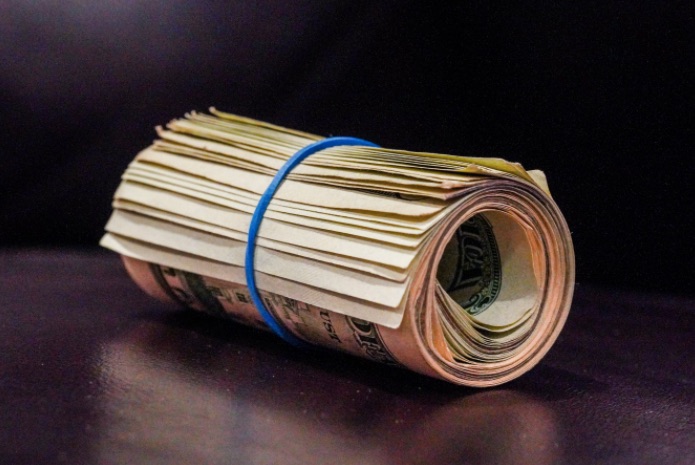
The money: Sherpas are your biggest expense. Costing as much as $100,000, they guide, carry and cook. With $500 a typical tip, one Time journalist added 2 yaks. In addition, gear could run close to $10,000 ($1,000 for a down suit and $300 for gloves are just the beginning). Add the permits ($10,000 minimum and more, depending on how many people), cell phone expense, airfare to Nepal ($1500 coach).

The Time: A daily workout regime is long and demanding. From squats to stairs to extreme procedures, getting in shape for Everest will cost many hours. For the climb itself, the acclimation process is gradual. Instead of a steady upward trek to the peak at 29,029 feet, climbers go up and down and up through a series of base camps that gradually accustom their lungs to the sparser air. I have read that it takes 6 weeks for the acclimation process and then 5 days to the summit.

Our bottom line? Defined as sacrifice, cost refers to more than money.

Into Thin Air by Jon Krakauer is a fascinating account of a disastrous expedition.

The Economic Lesson

Whenever climbers make health and weather decisions, they are weighing cost and benefit at the margin. Beset by lightheadedness, raging headaches, nausea, frostbite, and other maladies, they have to decide whether to proceed with the next stage. With questionable weather, to abort or not becomes the key issue.

Each decision either expands or contracts climbers’ margin of safety. Too large a margin and they don’t reach the peak. Too small and the danger is life-threatening.

An Economic Question: Defining cost as sacrifice, describe the “expense” of a recent decision.

Posted by: adminEcon
Tags: , , ,
Comments (0) Add a Comment

16524_7.31_000011573106XSmall

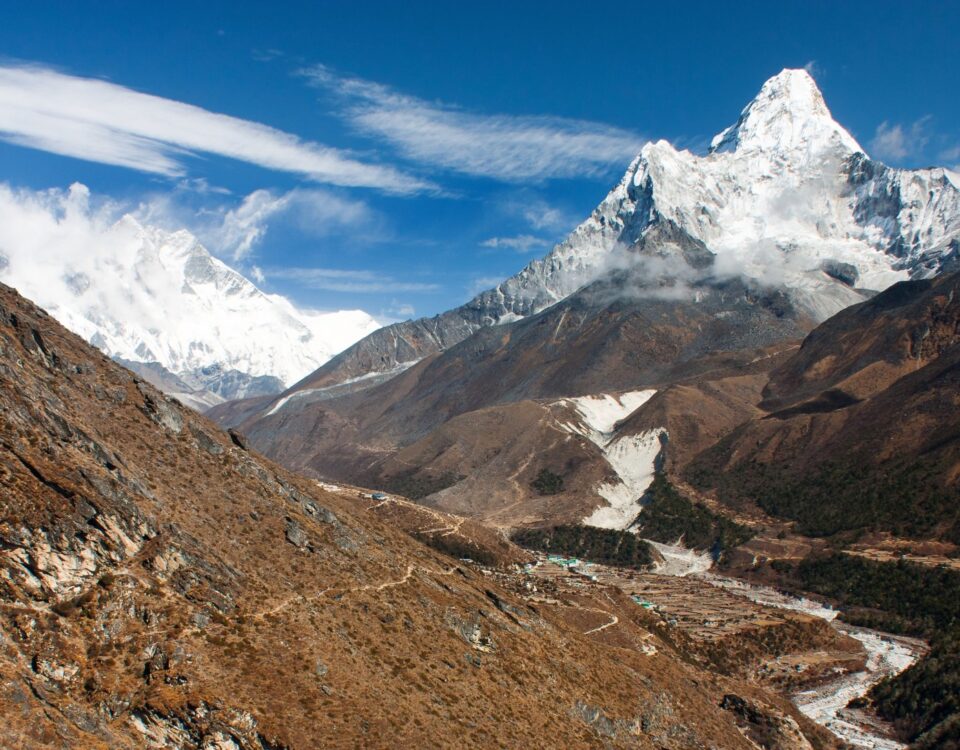
How high is Mount Everest?

No one really knows. China says 29,017 feet, Nepal, 29,028, and the National Geographic Society, 29,035. We don’t even agree about sea level. The U.S. uses the St. Lawrence River in Quebec. But the U.K uses another baseline. And other countries use a local reference point. Furthermore, the Himalayas are rising by several millimeters each year. As one scientist said, “The idea of saying, ‘The height of Everest is this, is an anachronism.’”

The Economic Lesson

Similar to Mount Everest’s height, a “Country of Origin” statistic no longer is accurate. A Toyota Camry is primarily American while a Ford pick-up is not. The Made in China iPhone has components from 9 countries. Learjet is based in Wichita, Kansas and owned by a Canadian company, Bombardier. For the origin of the Learjet 85:

  1. wings: Belfast
  2. horizontal and vertical stabilizers: Mexico
  3. engines: Canada
  4. fuselage: Mexico
  5. electrical system: Mexico

An Economic Question: How might balance of trade statistics be affected by more accurate data?


Posted by: adminEcon
Tags: , , ,
Comments (0) Add a Comment