Subscribe to our RSS feed
EconLife.com connects economics to everyday life, current events and history.

Tag Archives: Wendy’s

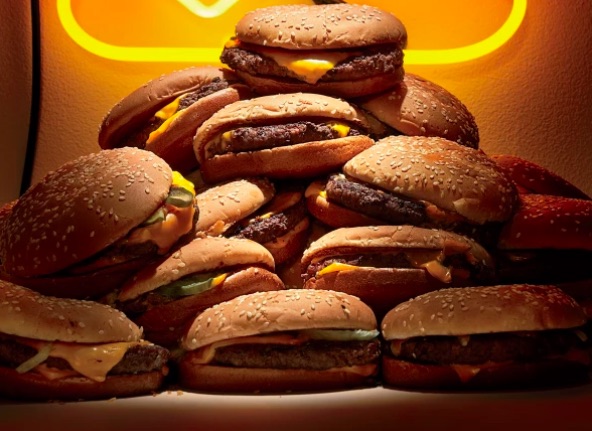
Burger_Wars_by_GrouchoM

By Mira Korber, guest blogger.

Times have changed. Wendy’s is now the second largest fast food chain restaurant in the US.

This interesting Atlantic article describes how Wendy’s savvy marketing pushed BK from second place to third. By focusing on quality food instead of comic advertising, Wendy’s successfully finished 2011 with higher revenue than Burger King, though it claims 1,300 fewer restaurants.

Wendy’s marketed their product as the freshest on the market, while BK attempted to lure in young men to their restaurants by using the “king” image in advertisements. It backfired.

The numbers? BK end of year sales: $8.4 billion; Wendy’s end of year sales: $8.5 billion. Oh wait…McDonald’s devoured both BK and Wendy’s with total sales of $34 billion. That’s a lot of burgers.

Read this Econlife post from 2011, before Wendy’s officially overtook BK in the final numbers.

The Economic Lesson

Wendy’s has differentiated itself by touting its healthy ingredients. Demand for Wendy’s burgers increased because healthy food also increased the utility of the product. With higher utility, more people purchased Wendy’s burgers, and it moved to the #2 spot.

An Economic Question: How do advertisements affect your demand curve for fast food?

Posted by: adminEcon
Tags: , , , , , , ,
Comments (0) Add a Comment

McDonald's Delivers in Many Developing Nations.

Wendy’s is about to pull ahead of Burger King in the U.S. The reason? People care about their lettuce and the shape of their burgers. Led by new ownership, Wendy’s now has 11 different greens (not just iceberg), a slightly rounded bun and burger, and russet French fries with “gourmet” salt. Maybe though the 2010 stats for the U.S. say it all. 

  • McDonald’s: 14,027 stores; $2.3 million sales per store
  • Wendy’s: 5,883 stores; $1.4 million sales per store
  • Burger King: 7,264 stores; $1.2 million sales per store

Other food strategies…

  1. Competing for the “casual dining” market, Olive Garden discovered that gnocchi can make a difference…but only if it is in chicken soup. As for pesto, it was rejected as too green (and strong and oily). 
  2. Referring to TCBY’s successful pistachio frozen yogurt launch, a restaurant trade letter says that pistachio nuts may be the 2012 hot item because they are ”exotic but not threatening.” 
  3. And finally, molecular gastronomy with an ultra slow souvide approach will be crucial for upscale restaurants. 

The Economic Lesson

On a scale of most competitive to least competitive, the 4 basic market structures are perfect competition, monopolistic competition, oligopoly, monopoly. Competing in monopolistically competitive markets, restaurants try to create a unique identity because there are so many similar firms. Beauty salons, clothing manufacturers and supermarkets also compete in monopolistically competitive markets.

An economic question: In product markets and factor resource markets, how do restaurants compete?

Posted by: adminEcon
Tags: , , , , , ,
Comments (0) Add a Comment